
Why Murder Cases Are Different
Why You Need an Experienced Murder Defense Lawyer
When someone is charged with murder, everything is on the line—their freedom, future, and in some cases, their very life. Unlike other criminal charges, murder cases are fundamentally different. They require specialized knowledge, deep courtroom experience, and mastery of complex legal issues.
If you or a loved one is facing a murder charge, it is not enough to have a general criminal defense lawyer. You need an elite defense attorney who understands the unique stakes and procedures involved in a homicide case. That's where Josh Tomsheck of Hofland & Tomsheck comes in. A Nationally Board-Certified Criminal Trial Lawyer, former Chief Deputy District Attorney, and death-penalty qualified capital defender, Josh is among the few attorneys in Nevada with the credentials, courtroom experience, and trial results necessary to properly defend a murder case.
Let's take a closer look at what makes murder cases different—and why it matters who you choose to defend you.

The Stakes in a Murder Case: Life in Prison or Death
Murder is the most serious criminal charge under Nevada law. A conviction for First-Degree Murder (NRS 200.030) can result in:
- Life without parole
- Life with parole eligibility after 20 years
- A 50-year sentence with eligibility after 20 years
- Or the death penalty in capital cases
Unlike other charges, where sentencing options may include probation or diversion, murder cases often come with mandatory and severe punishment. In capital cases, the trial itself includes a separate penalty phase, where the jury is asked to decide whether the defendant should live or die. These life-and-death decisions require an attorney who understands not just the law, but jury psychology, mitigation strategy, and constitutional litigation.
Capital Punishment: Death Is Different
In cases where the prosecution seeks the death penalty, the defense must comply with Nevada Supreme Court Rule 250, which sets stringent qualifications for capital defenders. Josh Tomsheck is certified under SCR 250 to serve as lead trial counsel in death penalty cases and has successfully defended clients facing execution.
Capital murder trials are tried in two distinct phases:
- Guilt Phase – Determines whether the defendant is guilty of murder.
- Penalty Phase – If convicted of first-degree murder, the jury must decide between the four punishment options listed above.
Defending capital cases requires knowledge of:
- Aggravating and mitigating factors
- Mental health and intellectual disability defenses
- Victim impact statements
- Constitutional limitations on execution eligibility
When a person's life is literally in the balance, every detail matters—from jury selection to mitigation witnesses to the framing of closing arguments.
Jury Selection in Murder and Capital Cases
Jury selection, or voir dire, is one of the most important stages of a murder trial. In capital cases, jurors must be death-qualified, meaning they must be willing to consider all four possible punishments:
- 50-year term with parole eligibility after 20
- Life with parole after 20 years
- Life without parole
- Death
This process adds layers of complexity to voir dire. An attorney must be able to:
- Identify jurors who are biased toward conviction or capital punishment
- Understand subtle indicators of juror sympathy or rigidity
- Tailor questioning to expose underlying belief systems
- Litigate challenges for cause based on a juror's inability to fairly weigh all sentencing options
Josh Tomsheck has handled dozens of murder jury trials, including capital cases, and understands how to select the right jury—and eliminate the wrong one.
Medical and Forensic Evidence: Understanding the Science
In murder cases, scientific and forensic evidence is often a cornerstone of the prosecution's case. But scientific evidence can be misleading, misinterpreted, or flat-out wrong if not carefully challenged.
Common forensic issues in murder cases include:
- DNA evidence (often partial or degraded)
- Blood spatter analysis
- Gunshot residue (GSR)
- Fingerprints and touch DNA
- Ballistics
- Toxicology reports
An experienced murder defense attorney must be able to critically analyze forensic reports, retain qualified expert witnesses, and cross-examine prosecution experts on methodology and reliability. Josh Tomsheck works with leading national experts in forensic pathology, ballistics, DNA interpretation, and toxicology to dismantle weak or flawed scientific conclusions.
Autopsy Testimony: Challenging the State's Narrative
Autopsies are a major component of most murder prosecutions. The Clark County Medical Examiner (or another pathologist) will testify to the cause and manner of death—two terms that carry immense legal weight:
- Cause of Death: The medical explanation (e.g., gunshot wound, blunt force trauma)
- Manner of Death: The legal classification (e.g., homicide, accident, suicide)
But autopsy conclusions are not infallible. A skilled defense attorney will:
- Question the thoroughness and objectivity of the autopsy
- Examine the chain of custody for physical evidence
- Present alternative explanations for the death
- Highlight errors or assumptions in the autopsy report
Whether it's bruising mistaken for strangulation or natural causes disguised as homicide, Tomsheck has the medical knowledge and litigation skills to challenge questionable conclusions—often forcing the State to re-evaluate or weaken their case.
The Importance of Mental States and Jury Instructions
Not every homicide is murder—and not every killing is first-degree murder. Nevada law distinguishes between:
- First-Degree Murder: Willful, deliberate, and premeditated
- Second-Degree Murder: Malicious, reckless disregard for human life
- Voluntary Manslaughter: Sudden heat of passion without malice
- Involuntary Manslaughter: Unintentional death from reckless or negligent behavior
Each of these charges hinges on the defendant's mental state—a highly nuanced and critical aspect of a murder trial.
Jury instructions play a pivotal role in how the jury understands and applies these distinctions. Defense counsel must:
- Propose accurate and favorable jury instructions
- Object to improper or prejudicial instructions
- Emphasize lesser-included offenses where applicable
- Argue the appropriate mental state based on evidence and law
Josh Tomsheck has successfully argued for reduction of charges and lesser-included instructions that led to acquittals on murder counts and convictions on reduced offenses—saving clients from life sentences or execution.
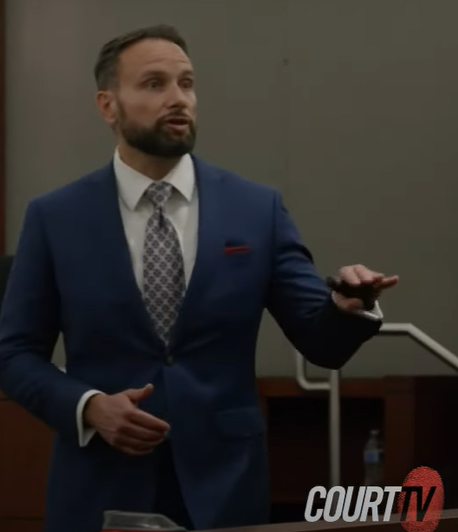
Why Experience Matters
There is no room for error in a murder case.
The attorney you choose must:
- Know the law
- Understand the science
- Command the courtroom
- Communicate with juries
- Handle media and high-profile attention
- Fight strategically in every phase of the trial
Josh Tomsheck has done exactly that in case after case. As a Board Certified Criminal Trial Specialist, a SCR 250-certified death penalty attorney, and a former Chief Deputy District Attorney, he brings a rare combination of experience, insight, and relentless advocacy to the defense of murder charges.
He has:
- Taken over 200 cases to jury trial
- Defended multiple death penalty cases
- Secured dismissals, acquittals, and reduced charges in some of Nevada's most serious homicide cases
- Served as appellate counsel in post-conviction murder appeals and habeas cases

If You're Facing a Murder Charge, Don't Wait. Call Now.
At Hofland & Tomsheck, we know that murder cases are different—because we've handled them at every level. Whether it's a justifiable homicide, a self-defense case, or a complex capital prosecution, we provide aggressive, strategic, and smart representation from day one.
We serve clients statewide in Nevada, including:
- Las Vegas and Clark County
- Washoe County (Reno)
- Carson City, Elko, Nye, White Pine
- U.S. District Court for federal homicide charges
Contact Josh Tomsheck today at (702) 895-6760 for a confidential, no-obligation consultation. Your defense starts now.

